What Actually Happens Inside a Great Sauce (And Why It Matters to You)

Photo: Jean-Pierre, CC BY-SA 2.0, via Wikimedia Commons
The Magic Was Never Really Magic
There's a moment every home cook has experienced: you open a jar of something truly exceptional — maybe a small-batch hot sauce from a craft maker, or a slow-fermented pepper mash from a farmers market vendor — and you think, how do they do that? The flavor is so layered, so alive, so impossibly complex that it feels like something beyond a recipe.
It isn't magic. It's chemistry. And once you understand the basic science at work, you don't just appreciate great sauces more — you make better ones yourself.
Let's pull back the curtain on what's actually happening inside an artisanal sauce, from the moment the ingredients hit the pot to the day you finally crack open the jar.
Acid: The Architect of Brightness
Acid is arguably the most important structural element in any sauce. It's what makes your mouth water, what makes flavors feel present rather than flat, and what keeps a sauce tasting fresh rather than heavy. But not all acids are created equal, and understanding the difference changes how you cook.
Vinegar-based sauces — your classic American hot sauces, Carolina-style BBQ bases, most shrubs — use acetic acid, which is sharp, clean, and fast-hitting on the palate. Citrus-forward sauces lean on citric acid, which is brighter and more volatile (meaning it fades faster with heat, which is why you add lime juice at the end, not the beginning). Fermented sauces generate lactic acid through bacterial activity, and this is where things get really interesting.
Lactic acid is softer and more complex than acetic acid. It doesn't just add brightness — it rounds flavors, creating that characteristic tang you find in kimchi, aged hot sauce, or a well-made fermented salsa. The pH of a finished sauce (typically between 3.4 and 4.6 for most shelf-stable condiments) isn't just a food safety number. It's a flavor dial. Sauces on the lower end of that range are sharper and more aggressive. Higher pH means more mellow, more integrated flavor.
For home cooks, the practical takeaway is simple: if your sauce tastes dull or muddy, acid is almost always the fix. But which acid you add, and when you add it, determines whether you're brightening or correcting.
Heat: Transformation, Not Just Temperature
Cooking a sauce isn't just about making ingredients safe to eat or combining them in the same pot. Heat triggers a cascade of chemical reactions that fundamentally change what those ingredients taste like.
The most important of these is the Maillard reaction — the browning process that occurs when proteins and sugars are exposed to high heat. This is why roasting your tomatoes before blending them into a sauce tastes so much more interesting than using raw ones. The same goes for charred onions, toasted dried chilies, and caramelized garlic. Each of those browned surfaces represents hundreds of new flavor compounds that simply don't exist in the raw ingredient.
Then there's caramelization, which is distinct from Maillard browning (though they often happen simultaneously). When natural sugars in onions, peppers, or fruit are heated past a certain threshold, they break down and reform into a whole family of new molecules — some nutty, some bitter, some almost butterscotch-like. A deeply caramelized onion jam isn't just a sweet onion; it's a chemically different food.
Heat also affects capsaicin — the compound responsible for chile pepper heat. Interestingly, cooking doesn't destroy capsaicin, but it does distribute it differently throughout a sauce, often making the heat feel more integrated and less aggressive than in a raw preparation. Long, slow cooking mellows perceived heat even when the capsaicin content stays roughly the same. This is why a slow-simmered salsa roja can use the same peppers as a fresh pico and still feel noticeably gentler on the palate.
Fermentation: The Long Game
If heat is transformation, fermentation is evolution. It's the process that separates a sauce with interesting flavor from one with genuinely deep flavor — the kind that seems to unfold in layers as you eat.
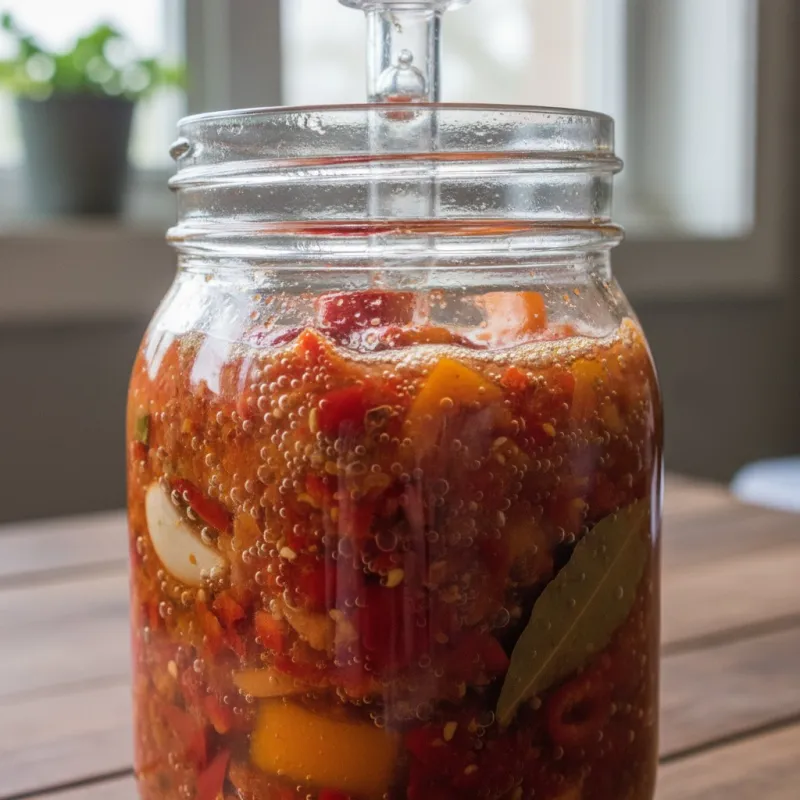
Fermentation works because naturally occurring bacteria (primarily Lactobacillus strains) consume the sugars in your ingredients and produce lactic acid as a byproduct. But they're also generating carbon dioxide, alcohols, esters, and a host of other flavor compounds along the way. The result is a flavor profile that no amount of cooking can replicate because it's literally alive — a product of biological activity rather than chemical reaction alone.
For craft sauce makers, fermentation is also a tool for consistency paradoxically achieved through controlled unpredictability. The specific bacteria present in a batch of fermented pepper mash are influenced by the peppers themselves, the local environment, and the temperature at which fermentation occurs. Two batches made from the same recipe will never taste identical. That variability isn't a flaw — it's the signature of something genuinely handmade.
At home, a basic lacto-fermented hot sauce is surprisingly approachable. Fresh chiles, salt (typically 2–3% of total weight), and time are all you need. The salt suppresses harmful bacteria while allowing Lactobacillus to thrive. Within five to ten days at room temperature, you'll have a live ferment with complexity that would take a cooked sauce hours to approximate.
Emulsification and Texture: The Unsung Hero
Flavor gets most of the attention in sauce science, but texture is just as important — and it's governed by emulsification. An emulsion is what happens when two liquids that don't naturally mix (fat and water, for example) are suspended together in a stable state. Think of a creamy Caesar dressing, a velvety hollandaise, or the smooth body of a well-made mole.
Emulsification requires an emulsifier — a molecule with one end that attracts water and one that attracts fat. Lecithin (found in egg yolks and mustard) is the classic example. But many ingredients used in artisan sauces have natural emulsifying properties: roasted garlic, blended chipotle peppers, even the starch released from cooked tomatoes.
The practical implication for home cooks is that adding fat to a sauce — olive oil, butter, nut paste — without proper emulsification just creates a greasy mess. But when you build an emulsion correctly (usually by adding fat slowly while blending or whisking), you get a sauce with body, richness, and a mouthfeel that makes every other flavor linger longer.
Time: The Ingredient Nobody Sells
All of these processes — acid development, Maillard reactions, fermentation, emulsion stability — are improved by time. A sauce that tastes sharp and disjointed the day it's made often tastes harmonious and complete after a week in the refrigerator. The flavors don't just sit next to each other; they marry, with volatile compounds equalizing and the more aggressive notes softening.
This is why the craft sauce makers we admire most tend to talk about their products in terms of weeks and months, not hours. It's why we believe so firmly that great flavor can't be rushed — only understood, guided, and given the space it needs to develop.
Knowing the science doesn't take the joy out of sauce-making. If anything, it deepens it. When you understand why something works, you stop following recipes blindly and start cooking with genuine intuition. And that's when things get really interesting.