Umami Unlocked: How Fermented Artisan Sauces Change the Way You Taste Everything
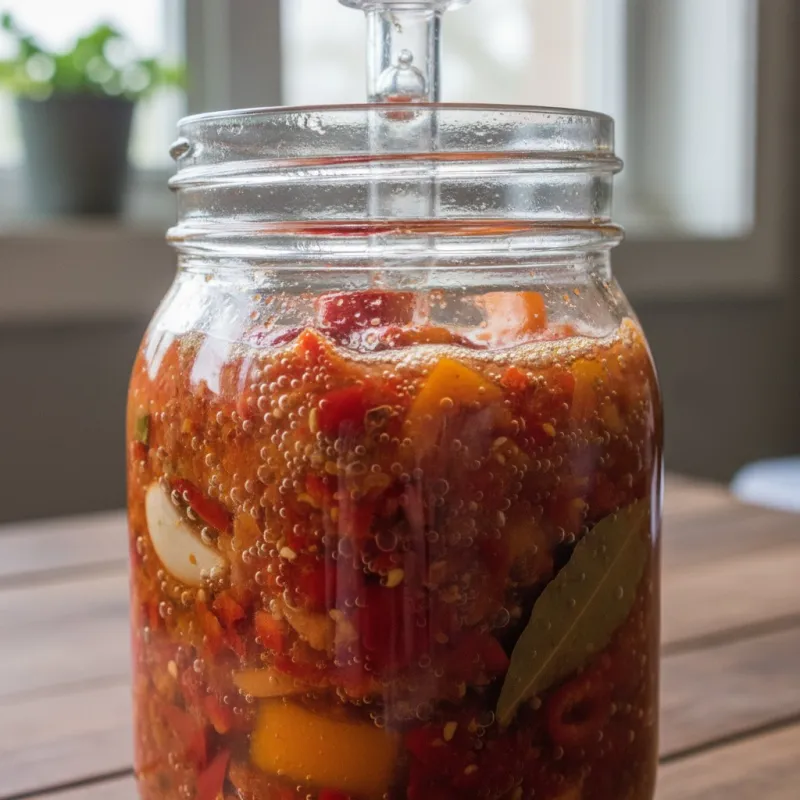
Photo: artisan fermented hot sauce jars with bubbling pepper mash close up, via dk2598b4tzius.cloudfront.net
You've probably had that moment. You take a bite of something — maybe a slow-braised short rib, a bowl of ramen, or a spoonful of a sauce you grabbed at a farmers market — and your whole mouth just wakes up. It's not sweet, it's not salty, it's not sour or bitter. It's something deeper, rounder, almost addictive. That feeling has a name: umami.
Here at Flava Sauces, we spend a lot of time thinking about what makes a condiment genuinely great versus just... fine. And the more we dig into it, the more umami keeps coming up as the secret weapon separating a forgettable sauce from one that makes you want to lick the jar. Spoiler: fermentation is almost always part of that story.
So What Actually Is Umami?
Umami is the fifth basic taste — alongside sweet, salty, sour, and bitter — and it was first identified by Japanese chemist Kikunae Ikeda back in 1908. He was trying to figure out why dashi broth tasted so profoundly satisfying, and he eventually traced it to glutamate, a naturally occurring amino acid found in kelp. He named the sensation umami, which roughly translates to "pleasant savory taste" in Japanese.
At its core, umami is a response to glutamates and nucleotides — specifically glutamic acid, inosinate (IMP), and guanylate (GMP). These compounds bind to specific receptors on your tongue and trigger a cascade of signals that your brain interprets as rich, savory depth. What makes umami especially interesting is something called synergy: when glutamates and nucleotides are present together, the perceived intensity of umami doesn't just add up — it multiplies. That's why combining, say, a tomato-based sauce with an aged cheese or a fermented condiment creates something that tastes far more complex than either ingredient alone.
Why Fermentation Is the Umami Amplifier
Here's where it gets really cool for sauce nerds. Fermentation — the process by which microorganisms like bacteria, yeasts, and molds break down sugars, starches, and proteins — is essentially a natural umami factory.
When proteins ferment, they break down into their component amino acids, including glutamate. The longer and more carefully a sauce is fermented, the more free glutamates develop. This is exactly why fish sauce, miso, soy sauce, and traditional Worcestershire are culinary powerhouses. It's also why a small-batch fermented hot sauce hits differently than a mass-produced bottle that uses vinegar and heat processing to achieve a quick result.
Mass production typically prioritizes consistency and shelf stability over complexity. High-heat pasteurization kills off the living cultures responsible for those layered flavors, and the shorter production timelines mean less time for glutamates to develop. The result is a product that tastes flat by comparison — functional, but not alive.
Small-batch fermented sauces, on the other hand, are built on patience. "You can't rush a lacto-ferment," says Marcus Webb, who makes small-batch pepper sauces out of Asheville, North Carolina. "Every week that mash sits in the crock, it's getting more complex. You're literally watching chemistry happen. The flavor in week six is nothing like week one — it's got this almost funky, tangy depth that you just can't fake."
Marcus ages some of his pepper mashes for up to six months before bottling, and the difference is immediately apparent. Where a younger sauce might hit you with sharp heat and vinegar, a long-fermented version unfolds — warmth, fruitiness, funk, and that lingering, coating savoriness that keeps you going back for one more bite.
Recognizing Umami in Your Kitchen
Developing your umami palate doesn't require a chemistry degree. It just takes a little intentional tasting.
Start with a side-by-side comparison. Grab a bottle of a quality artisan fermented hot sauce and put it next to a standard grocery store brand. Taste them straight, then on a piece of plain bread. Notice how the fermented version seems to linger — that's the glutamates coating your taste receptors and hanging around. The mass-produced version will likely taste brighter but flatter, fading quickly.
From there, try layering umami sources. Cook a simple pasta with canned tomatoes (already rich in glutamate), finish it with a splash of fish sauce (a fermented umami bomb), and top with finely grated Parmesan (aged cheese = more free glutamates). Now taste a forkful with a tiny dot of a quality fermented condiment on the side. The synergy effect is real and immediate.
Some other everyday ingredients to experiment with:
- Soy sauce and tamari — both fermented, both packed with glutamates
- Worcestershire sauce — traditionally contains fermented anchovies and tamarind
- Miso paste — a fermented soybean paste with serious depth
- Kimchi and fermented chili pastes — layered, complex, and endlessly versatile
- Aged vinegars — especially balsamic and sherry vinegar, which develop umami compounds during aging
"People always think umami is just 'meaty,'" says Priya Nair, a culinary educator based in Austin, Texas, who runs workshops on flavor development. "But it shows up in so many plant-based ingredients too. Once you start recognizing it, you start understanding why certain combinations just work — and why you keep reaching for certain condiments over and over."
The Artisan Difference, Tasted
At Flava Sauces, we believe the best condiments aren't just toppings — they're flavor transformers. A great fermented sauce doesn't just sit on top of your food. It integrates, it amplifies, it pulls out flavors in the dish you didn't even know were there.
That's the power of umami, and it's the reason small-batch makers who take the time to ferment properly are creating something genuinely different from what you'll find in a standard supermarket aisle. It's not snobbery — it's chemistry. Real fermentation takes time, attention, and a willingness to let nature do its thing.
Next time you're reaching for a condiment, take a second to actually taste it. See if you can feel that round, coating, savory quality that makes your mouth water for more. If you find it, you've found umami — and you've found a sauce worth keeping around.
Your cooking will never quite be the same.