Think of Your Sauce Like a Sommelier Would: The Art of Pairing Condiments with Everything on Your Plate
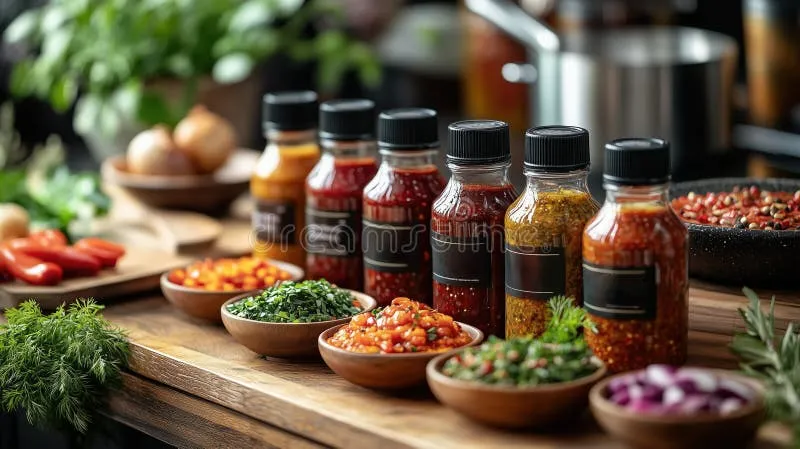
Photo: assorted artisan sauces condiments spread on wooden table with fresh ingredients, via thumbs.dreamstime.com
There's a reason the best restaurants sweat the details on their sauces. It's not just about adding moisture or heat to a dish — it's about completing a flavor conversation that's been happening since the first ingredient hit the pan. Most home cooks spend real energy sourcing good proteins and fresh vegetables, then grab whatever's closest in the fridge for the sauce. That's like picking a great steak and pairing it with a random glass of whatever's open.
Sauce pairing is a legitimate culinary skill, and once you start thinking about it intentionally, you'll notice the difference on every single plate.
Why Sauce Architecture Matters
Before we get into specific pairings, it helps to understand what a sauce is actually doing on a plate. Every great condiment or sauce has what food folks call an "architecture" — a structure built from fat, acid, salt, sweetness, and sometimes heat or umami. These elements don't just add flavor; they interact with your food at a chemical level.
Acid, for instance, cuts through fat. That's why a bright, vinegar-forward Carolina-style barbecue sauce works so well with fatty pulled pork — the acidity slices through the richness and keeps each bite feeling fresh. Swap that sauce for something sweet and thick on the same meat, and suddenly your plate feels heavy and one-dimensional. The fat in the pork has nowhere to go.
Similarly, salt amplifies. A well-salted sauce applied to a mild protein like chicken breast or tofu acts almost like a seasoning amplifier, pulling forward flavors that might otherwise get lost. Understanding these basic interactions gives you a real framework, not just a list of rules to memorize.
Protein Pairings: Match the Weight
One of the most reliable starting points for sauce pairing is matching the weight and intensity of your sauce to the weight and intensity of your protein.
Red meat tends to be rich, fatty, and deeply savory. It wants sauces that can hold their own — think bold chimichurri loaded with garlic and herbs, a reduced red wine demi-glace, or a smoky Kansas City-style barbecue sauce. Lighter, cream-based sauces can work but often get swallowed up by the beef's intensity.
Pork is more versatile than people give it credit for. It bridges sweet and savory beautifully. Apple-based sauces, mustard-forward preparations, and tangy vinegar-based condiments all shine here. Pork's natural sweetness plays off acidity particularly well.
Chicken and turkey are mild proteins that take on the character of whatever sauce surrounds them. This is where nuanced, complex sauces get to be the star. A well-crafted herb-forward green sauce, a roasted garlic aioli, or even a lightly spiced mole brings these proteins to life in a way that bolder proteins might overshadow.
Fish and seafood call for restraint. Heavy, rich sauces overwhelm delicate textures and flavors. Citrus-based preparations, light herb sauces, and fermented condiments with bright acidity are your friends here. A drizzle of a good ginger-scallion sauce on a piece of salmon is a completely different experience than drowning it in something thick and sweet.
Vegetables Deserve Thoughtful Pairing Too
Here's where a lot of home cooks leave flavor on the table. Vegetables often get the most generic treatment when it comes to sauce — a drizzle of olive oil, maybe some salt — and that's a missed opportunity.
Roasted root vegetables like carrots, parsnips, and sweet potatoes have natural sugars that caramelize under heat. They pair beautifully with something that provides contrast — a tahini-based sauce with lemon, a spiced yogurt condiment, or a miso-forward glaze that adds umami depth to all that sweetness.
Bitter greens like broccoli rabe, Brussels sprouts, or charred cabbage actually want richness to balance them out. A buttery, slightly sweet sauce or a savory anchovy-laced preparation softens the bitterness and makes the whole thing more approachable.
Mild vegetables — zucchini, green beans, summer squash — are a lot like chicken in that they're a blank canvas. They can handle bolder sauces without conflict, so this is a good place to experiment with something you haven't tried before.
The Starch Equation
Starches are often treated as neutral vehicles, but they're actually an important variable in sauce pairing. Pasta has a surface texture that clings to sauce differently than, say, a smooth polenta. Rice absorbs liquid readily. Crusty bread creates friction and contrast.
Thick, chunky sauces work well with ridged pastas and hearty grains that can trap them. Smooth, thin sauces — think a light pan sauce or a bright herb oil — are better suited to silky pasta shapes or as a finishing drizzle over rice dishes. Pouring a thin, delicate sauce over something like a thick grain bowl means it just pools at the bottom, never really integrating.
Bread-based dishes and sandwiches are another consideration. Spreads and condiments need body here — something with enough fat or emulsification to coat rather than soak through. A well-made aioli, a thick relish, or a proper compound butter all do this job far better than a thin vinaigrette.
Common Mistakes Worth Knowing About
The biggest one? Using the same sauce for everything. It sounds obvious, but a lot of us have a favorite condiment and default to it regardless of what's on the plate. That trusty hot sauce you love might be perfect on eggs and tacos, but it can completely derail a delicate piece of flaky white fish.
Another common misstep is ignoring temperature. Serving a cold, straight-from-the-fridge sauce on a hot dish doesn't just create a temperature mismatch — it can dull the sauce's aromatics and change how you perceive its flavor. Give your condiments a moment to come closer to room temp, or warm them gently when it makes sense.
Finally, don't forget about sauce quantity. More isn't always better. Over-saucing a dish drowns out the ingredients you worked hard to prepare and can make even a great pairing feel muddy. Start with less than you think you need. You can always add more.
Building a Better Plate
Once you start thinking about sauce pairing as an intentional practice rather than a finishing touch, your whole approach to menu planning shifts. You'll start to think about what's on the plate as a system — proteins, vegetables, starches, and sauces working together rather than independently.
That's the real payoff. A thoughtfully paired sauce doesn't just taste good on its own; it makes everything around it taste better too. It's the difference between a meal that's technically fine and one that people actually remember.
Your condiment shelf is more powerful than you think. Start treating it that way.