When You Know Where It Comes From, It Tastes Better — Here's the Science Behind That
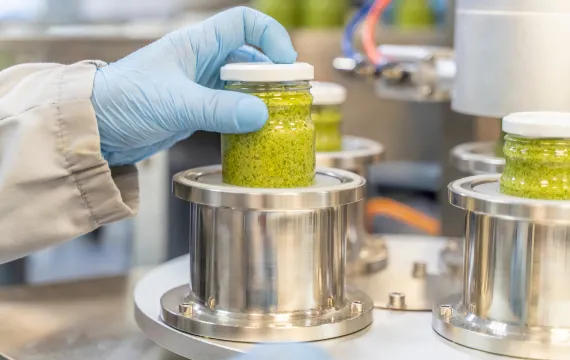
Photo: artisan sauce maker small batch production storytelling ingredient sourcing, via jochamp.com
Pour two identical spoonfuls of the same hot sauce. Tell someone the first one came off a factory line somewhere outside of Cleveland. Tell them the second one was made by a woman in coastal Georgia who grows her own Datil peppers and ferments them in hand-thrown clay crocks. Ask them which one tastes better.
Spoiler: it's almost always the second one.
And here's the thing — they're the same sauce. Same heat. Same acidity. Same everything. But something shifts the moment a story enters the picture, and that shift is real, documented, and genuinely fascinating.
Your Brain Is Already Seasoning the Food Before You Take a Bite
Food psychologists have a term for this: expectation-driven flavor perception. Basically, the brain doesn't wait for your tongue to do the work. It starts forming taste predictions the moment you receive any information about what you're about to eat — including where it came from, how it was made, and who made it.
Charles Spence, a professor of experimental psychology at Oxford, has spent years studying how context shapes taste. His research consistently shows that the same food or drink is rated as more flavorful, more complex, and more satisfying when accompanied by richer background information. Wine tasters consistently score the same pour higher when told it's from a prestigious region. Coffee drinkers describe deeper, more nuanced flavors when they've been told about the farm's altitude and harvest practices.
Sauce is no different. When you know that a particular barbecue sauce uses a vinegar base that's been part of a Piedmont family's recipe since Prohibition, your palate is primed. You're not just tasting tang — you're tasting history. And your brain, eager little storyteller that it is, fills in the gaps with richness and meaning.
The Word Artisans Use Is "Intentionality"
Talk to anyone who makes small-batch sauces for a living, and the word that keeps coming up is intentional. Not trendy. Not marketing-speak. Just the honest acknowledgment that every decision in the production process — what pepper variety, what fermentation vessel, what water source, how long — was made deliberately, with a specific flavor outcome in mind.
Marcus Webb, who runs a small condiment operation out of Asheville, North Carolina, puts it plainly: "When I tell someone that I source my tomatoes from a single farm twenty minutes away and that I've been working with that farmer to develop a lower-water variety that concentrates the sugars, I'm not bragging. I'm giving them a key. A key to tasting what I actually built."
That framing — a key to tasting — is exactly right. Knowing the production story isn't background noise. It's a guide. It tells you what to look for, which flavors were intentional, and why certain notes show up the way they do. Without that context, you might taste something smoky in a sauce and chalk it up to liquid smoke. With context, you learn it's from a slow wood-fire reduction process that took six hours. Same flavor, completely different meaning — and, for most people, completely different enjoyment.
Sourcing Isn't Just an Ethical Choice — It's a Flavor Choice
Ingredient sourcing gets talked about a lot in terms of values: supporting local farmers, reducing food miles, paying fair wages. All of that matters. But sourcing is also, quietly and powerfully, a flavor decision.
Peppers grown in volcanic soil in New Mexico don't taste like peppers grown in a greenhouse in a controlled environment. Garlic from Gilroy, California has a different aromatic profile than garlic that's been sitting in a distribution warehouse for three months. Honey from a hive near a wildflower meadow carries floral complexity that commodity honey simply doesn't have.
When an artisan sauce maker tells you where their ingredients come from, they're not padding out their label copy. They're describing the actual flavor architecture of what's in the bottle. Knowing that the mustard seeds in your whole-grain Dijon came from a specific farm in the Canadian prairies tells you something about the bite and the earthiness you're about to experience. The story is the tasting note.
Lena Okafor, who makes fermented pepper sauces out of a small production kitchen in Houston, describes it this way: "I take people through the whole process at our pop-ups — here's the pepper, here's the brine, here's the jar at day three and day fourteen. By the time they taste the finished sauce, they've basically watched it become what it is. And every single time, people say it tastes more alive. More complex. I don't think it's placebo. I think they're finally paying attention."
Narrative Flavor and the Rise of the Intentional Eater
There's a growing movement in food culture — less about trends and more about attention. Call it mindful eating, intentional tasting, or just slowing down. The throughline is the same: people want to understand what they're eating, not just consume it.
Artisan condiments fit neatly into this shift because they come with stories baked in. A jar of small-batch pepper jelly from a Georgia farm stand isn't just a condiment — it's a specific harvest, a specific season, a specific set of hands. That narrative doesn't just make the product feel more special. It makes the eating experience richer in a way that's hard to fake and impossible to mass-produce.
Food writer and flavor consultant Dana Herrera calls this "narrative flavor" — the idea that the meaning embedded in a food product becomes part of its sensory profile. "We've spent decades separating the story from the food," she says. "Artisan producers are putting them back together. And when that happens, people don't just enjoy the food more — they remember it differently. It becomes a real experience instead of just a meal."
How to Actually Use This at Your Own Table
You don't need a food psychology degree to put this into practice. The next time you crack open a bottle of something artisanal — whether it's a fermented hot sauce, a small-batch barbecue glaze, or a hand-crafted mustard — take thirty seconds to read the label. Not the nutrition facts. The story. Who made it. Where the ingredients came from. What inspired the recipe.
Then taste it. Notice whether something shifts.
Better yet, share what you learned with whoever you're eating with. Pass the bottle around. Read the origin note out loud. It sounds a little precious until you realize it consistently makes the meal better — more conversational, more connected, more memorable.
That's the real secret sauce makers already know: flavor isn't just chemistry. It's context. And the more context you bring to the table, the more flavor you'll find waiting there.