Guilty as Charged: Why Your Fancy Sauces Sit on the Shelf While Ketchup Does All the Work
Let's paint a picture. You're at a specialty food shop — maybe a weekend farmers market, maybe a boutique grocer with good lighting and a chalkboard menu near the entrance. You spot a small-batch habanero honey glaze. The label is beautiful. The sample is incredible. You buy it without hesitation.
Fast-forward to Tuesday night. You're making burgers. You reach right past that habanero honey glaze and grab the ketchup.
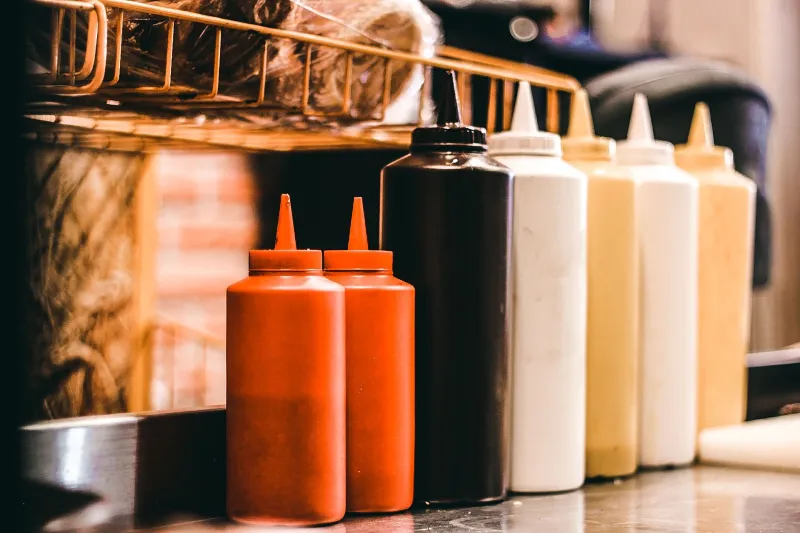
We've all done it. And the bottle collection only grows from there — tamarind barbecue, yuzu kosho mayo, a fermented green goddess that honestly changed your life at that tasting. All of them lined up on the shelf like trophies. None of them seeing any real action.
This isn't about being wasteful or indecisive. There's actually a pretty fascinating psychological explanation for what's going on — and more importantly, there's a way out.
The Comfort of the Familiar
Food psychologists have a term for this: default behavior. When we're tired, distracted, or just trying to get dinner on the table before anyone melts down, our brains don't want to make new decisions. They want to repeat what worked last time. Ketchup worked last time. Ketchup will work this time. Decision made, done.
This isn't laziness — it's efficiency. The human brain is genuinely wired to conserve cognitive energy, especially at the end of a long day. That's why so many of us have elaborate pantries full of ingredients we "meant to use" and a rotation of about six meals we actually cook.
The problem is that this mental shortcut keeps your artisan sauces permanently stuck in "special occasion" territory. And special occasions, as we all know, come around a lot less often than we think they will.
The Trophy Shelf Trap
There's another layer here that's worth being honest about: sometimes we buy premium condiments partly for the feeling of buying them. The act of choosing a beautifully crafted, small-batch sauce is itself satisfying. It signals something — about your taste, your curiosity, your identity as someone who cares about food.
Once you've got that feeling, the bottle has already done some of its work. It sits on your counter looking good, reinforcing that identity every time you walk by. Actually cracking it open and using it on a random Wednesday with no one watching? That feels almost... anticlimactic.
This is what we'd call the trophy shelf trap. The sauce becomes a symbol rather than an ingredient. And symbols don't get used up.
The Intimidation Factor Is Real
Here's something nobody really talks about: specialty sauces can be genuinely intimidating. When you paid $14 for a small jar of hand-crafted mole, there's a low-key pressure to use it correctly. For the right dish. On the right occasion. With the right people around to appreciate it.
That pressure turns into paralysis. You don't want to "waste" it on a Tuesday. So you wait. And wait. And eventually the bottle expires, or you forget it's there, or both.
Ketchup has no such baggage. Nobody's precious about ketchup. You squeeze it on whatever, no ceremony required.
How to Actually Start Using What You Buy
Okay, so now that we've diagnosed the problem, let's fix it — practically, not theoretically.
Move your artisan sauces to the front. Literally. Reorganize your fridge and pantry so that the specialty bottles are at eye level, front and center. What you see first is what you use. Ketchup can live in the back for a while.
Give each bottle one job. Instead of thinking "what would be perfect for this sauce," flip it: pick one sauce per week and commit to finding a use for it by Sunday. Doesn't have to be fancy. That smoked pepper sauce? Goes on scrambled eggs Thursday morning. Done. The goal is contact, not perfection.
Use the one-swap rule. Whatever you'd normally reach for, replace it with an artisan alternative just once this week. Burger night? Try the habanero honey glaze instead of ketchup. Sandwich? That fermented mustard you've been hoarding. One swap, low stakes, no pressure.
Stop saving things for special occasions. This one's a mindset shift, but it matters. Regular Tuesday dinners with your family are worth good food. You don't need guests or a holiday to justify opening something interesting. In fact, the more you use these sauces in everyday cooking, the more naturally they'll work their way into your routine.
Keep a small "open bottle" section. Designate one shelf or drawer as the active zone — bottles that are open and need to be used within a reasonable timeframe. Once something moves into that section, it becomes a priority rather than a background decoration.
The Bigger Picture
There's something kind of wonderful about the fact that people are buying artisan condiments in the first place. It means home cooks are genuinely curious. They want more complexity, more story, more craft in their food. The instinct is right — the follow-through just needs a little nudge.
At Flava Sauces, we think every meal is an opportunity to taste something that was made with intention. Not just on holidays. Not just when you're trying to impress someone. On a regular weeknight, with whatever's in the fridge, for no particular reason except that food is one of the genuinely great things in life.
Ketchup's fine. We're not here to start a war with ketchup. But that habanero honey glaze deserves a shot. Open it tonight. Put it on something. See what happens.
We're pretty confident you won't regret it.