Too Many Bottles, Not Enough Dinners: How to Finally Get a Handle on Sauce Hoarding
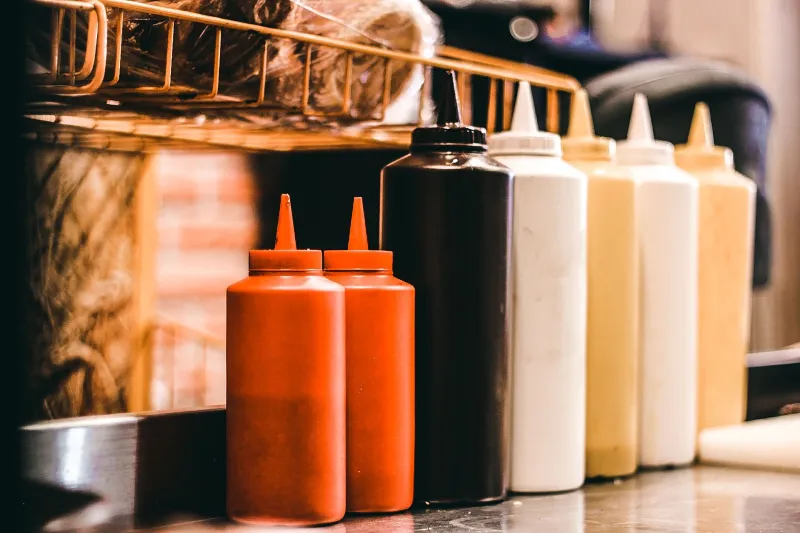
Open your fridge door right now. Go ahead. If you're like most American home cooks, you're staring at somewhere between eight and fifteen bottles in various states of fullness, at least three of which you genuinely cannot remember buying. There's the sriracha you grabbed during a spicy phase, a fancy finishing sauce from that farmers market two summers ago, and something labeled "smoky chipotle" that you were absolutely certain you'd use weekly.
You haven't touched it since October.
This isn't a character flaw. It's a remarkably common pattern — part psychology, part marketing, part the very human tendency to cook with intention and then, you know, order pizza instead. But understanding why your sauce shelf spirals out of control is actually the key to fixing it. And fixing it means you'll finally get to enjoy the good stuff before it quietly turns on you.
Why We Keep Buying (Even When We Have Plenty)
Food marketing is exceptionally good at one thing: making you feel like a bottle will transform your cooking. A well-designed label, a compelling flavor name, a sample at a specialty grocery store — these aren't accidents. They're engineered moments of optimism. You're not just buying a sauce; you're buying a version of yourself who makes interesting food on a Tuesday night.
Add to that the very real fear of missing out. Seasonal releases, limited-edition small-batch runs, and regional specialties all carry an implied urgency. "If you don't grab it now, it's gone." For food enthusiasts especially, that scarcity signal is almost impossible to ignore. So you buy it, you bring it home, and it joins the rotation — except it never quite makes it into the rotation because you're not sure what to do with it.
There's also what food psychologists sometimes call "aspirational purchasing" — buying ingredients for the cook you want to be rather than the cook you actually are on a weeknight. Tamarind-based sauces, aged balsamic reductions, ghost pepper hot sauce: all genuinely great products. All requiring a specific dish, a specific mood, and honestly a specific level of energy that Tuesday at 6:30 p.m. rarely delivers.
The Emotional Attachment Problem
Here's where it gets a little weird: we develop genuine feelings about our condiments. Not in a therapy-worthy way, but in a very real "I'm saving this for the right moment" way that means a beautiful artisan sauce sits untouched for eighteen months.
There's a version of this that happens with nice wine, good chocolate, and fancy olive oil too. We treat quality as a reason to wait instead of a reason to dig in. The irony is that most sauces — even excellent ones — have a finite window. Flavor compounds degrade. Emulsions separate. That gorgeous depth you paid for starts to flatten out long before you find the "perfect" dish to pair it with.
The right moment, most of the time, is just dinner. A well-made sauce doesn't need a special occasion. It creates one.
Taking Stock (Literally)
Before you can build better habits, you need an honest inventory. Pull everything out. Yes, everything. Line it up on the counter and actually look at it. Check dates, check fill levels, check whether you even remember what drew you to each bottle in the first place.
Group them roughly by flavor profile: bright and acidic, rich and savory, spicy, sweet, fermented and funky. This exercise alone tends to reveal the obvious: you probably have three variations of the same basic flavor category, and you've been defaulting to just one of them out of habit.
Toss anything that's clearly past its prime. Be honest about the things you've never opened and realistically never will. Donate sealed bottles to a food pantry if they're still good — it beats the guilt of eventually throwing them away.
Building a System That Actually Works
The goal isn't minimalism for its own sake. If you love sauces — and if you're here, you probably do — the goal is an intentional collection you actually cook your way through.
The one-in, one-out rule is a good starting point. Before you buy a new bottle, finish or commit to finishing something you already have. It sounds simple because it is, but the friction of the rule is what makes it effective. It forces you to think about your actual usage patterns rather than your aspirational ones.
Front-of-fridge rotation is the physical version of the same idea. Whatever needs to be used soonest goes front and center. Out of sight genuinely is out of mind when it comes to condiments — the bottles pushed to the back might as well not exist.
The weekly anchor method is something a lot of intentional home cooks swear by: pick one sauce at the start of the week and actively find two or three ways to use it before the week is out. A smoked chili sauce works as a marinade on Monday, a taco topping on Wednesday, and stirred into scrambled eggs on Saturday morning. Using a sauce repeatedly across different applications deepens your understanding of it and actually empties the bottle.
Theme nights might sound corny, but they work. A rotating "hot sauce night" or a weekly grain bowl where you experiment with a different finishing sauce gives your collection a real purpose instead of just shelf presence.
Buying Better Going Forward
The other half of the equation is changing how you shop. Specialty sauces and artisan condiments are genuinely worth buying — but buying with intention beats buying on impulse every time.
Ask yourself three questions before any new bottle comes home: Do I know at least two specific dishes I'll make with this? Do I have the space for it right now? Am I buying this because I want it or because I'm afraid I'll miss it? If you can't answer the first question, it's probably not the right moment.
When you do find something worth adding, give it the attention it deserves. Read about it. Understand the flavor profile. Think about where it fits in your actual cooking life — not your imaginary Tuesday-night-gourmet cooking life, but the one where you've got forty-five minutes and a fridge full of ingredients that need to be used.
The best sauce shelf isn't the fullest one. It's the one where every bottle has a purpose, a place, and a real shot at making it into your food before the flavor fades. That's the kind of collection worth building.