Your Sauces Are Quietly Changing — Here's What's Actually Going On
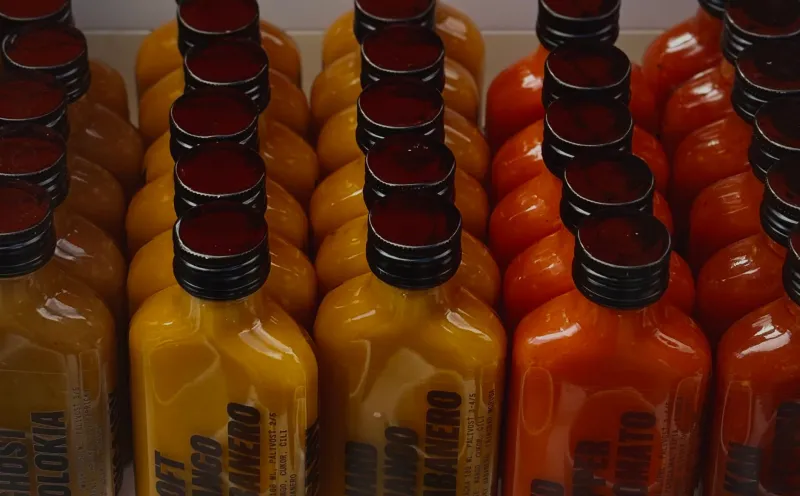
You crack open a bottle of your favorite artisan hot sauce — the one you paid good money for, the one with the complex smoky finish and that slow-building heat — and something's off. It still smells fine. The date on the label says you've got months to go. But it just doesn't hit the same way it did when you first brought it home.
You're not imagining things. And the sauce probably isn't "bad" in any traditional sense. What's happening is subtler, more frustrating, and honestly more interesting than simple spoilage. Your sauce is degrading — slowly, silently, and in ways that most home cooks never think to look for.
Let's get into it.
The Shelf Life Myth
Expiration dates and best-by windows are useful, but they're designed around a pretty optimistic set of assumptions — namely, that your sauce has been stored under ideal conditions from the moment it left the production facility. In reality, that bottle has probably sat under fluorescent store lighting, gotten jostled around in a grocery bag, lived on a warm pantry shelf near your stove, and been opened and closed a dozen times.
Each one of those moments matters more than most people realize. Artisan sauces — especially small-batch products made with real fermented ingredients, fresh chiles, or minimally processed fruit — are more sensitive to environmental stress than mass-market condiments loaded with stabilizers and artificial preservatives. That sensitivity is part of what makes them taste so alive. It's also what makes them more vulnerable.
Light Is Not Your Sauce's Friend
Ultraviolet light is one of the most underrated enemies of condiment quality. Even indirect light exposure — the kind your sauce gets sitting on a countertop near a window or under kitchen overhead lights — can break down pigment compounds and accelerate the oxidation of volatile aromatic molecules. Those aromatics are exactly what give a well-crafted sauce its top notes: the brightness of a vinegar-forward hot sauce, the floral quality of a mango-habanero blend, the herbal lift in a chimichurri-style condiment.
When those molecules degrade, the sauce doesn't necessarily smell rotten — it just smells like less of itself. The complexity flattens. What was once a layered, interesting condiment starts tasting one-dimensional.
Dark glass bottles offer some protection, but they're not foolproof. Clear glass and plastic offer almost none. If your favorite sauce comes in a clear bottle and you've been leaving it on the counter, that's your first culprit.
Heat Does the Slow Work
Temperature fluctuation is the second big offender. Most people store sauces in the pantry without thinking twice, but pantries — especially those near stovetops, ovens, or exterior walls — can swing significantly in temperature throughout the day. Every time a sauce heats up and cools back down, you're accelerating chemical reactions that would otherwise happen very slowly.
For fermented condiments like kimchi-based sauces, aged hot sauces, or anything with live cultures, heat can also mess with microbial balance. The fermentation doesn't stop just because the bottle is sealed — it slows, but it continues. Warmth speeds that process up, which can push the flavor profile in directions that weren't intended.
The fix here is almost embarrassingly simple: refrigerate more than you think you need to. Even shelf-stable sauces that don't require refrigeration will hold their flavor significantly longer when kept cold. Think of the fridge not as a food-safety measure but as a flavor-preservation tool.
Air Is Doing Damage Every Time You Open the Bottle
Oxidation is the third piece of this puzzle, and it's one that compounds with every use. The moment you crack a bottle, oxygen enters. Each subsequent opening introduces more. Over time, oxygen reacts with fats, pigments, and aromatic compounds in ways that dull and muddy flavor.
This is especially noticeable with oil-based sauces, nut-based condiments, and anything with a high content of fresh herbs or citrus. A green herb sauce that was vivid and bright when you opened it can turn dull and almost bitter after a few weeks of regular use — not because anything has gone wrong, exactly, but because oxidation has been doing its quiet work.
If you notice a sauce changing in color — browning around the surface, fading from a vivid red to a more muted brick tone — that's oxidation made visible. The flavor change has been happening just as steadily.
One practical habit worth adopting: when a bottle is getting low, consider decanting the remaining sauce into a smaller container. Less empty space means less oxygen exposure with every open-and-close cycle.
How to Actually Diagnose a Declining Sauce
Before you toss anything, do a quick sensory audit. Start with smell. A sauce that's genuinely past its prime will often smell flat, musty, or off in a way that's hard to ignore. A sauce that's simply lost some brightness will smell like a muted version of itself — recognizable, but quieter.
Next, taste a small amount on its own, without food. Ask yourself: does this still have distinct flavor layers, or does it all blend into one undifferentiated note? Is there a finish, or does the flavor just stop? Is the heat (if applicable) still building the way it used to, or has it gone either flat or weirdly sharp?
If the sauce tastes muted but not wrong, it's not garbage — it just needs a different application. Sauces that have lost their top notes often work beautifully as a cooking ingredient rather than a finishing condiment. Stir them into braises, whisk them into marinades, or use them as a base for compound butters. The heat and the depth usually hold up even when the brightness fades.
Setting Up Your Kitchen for Better Sauce Storage
The goal is to minimize the three main stressors — light, heat, and air — as much as your kitchen layout allows.
For anything you use less than once a week, the refrigerator is the right answer, full stop. For daily-use bottles, find a drawer or a cabinet away from the stove and oven. If your kitchen gets a lot of natural light, that sunny spot on the counter is not the place for your artisan condiments, no matter how nice it looks for Instagram.
For bottles you open infrequently, consider using a vacuum pump wine stopper on wide-mouth jars to reduce oxygen exposure between uses. It sounds fussy, but if you've spent real money on a small-batch fermented sauce or a hand-crafted regional condiment, it's worth the extra thirty seconds.
And if you buy in multiples — which, honestly, is a reasonable thing to do with a sauce you love — keep the backup bottles sealed and stored somewhere cool and dark until you're ready to open them. An unopened, properly stored bottle will almost always outlast and outperform one that's been open for a month under suboptimal conditions.
The Takeaway
Your sauces are living products. Even the ones that seem shelf-stable are in a slow, constant state of change — and your kitchen environment is either helping them or hurting them. A little attention to where and how you store your condiments pays off in a way that's genuinely noticeable every time you sit down to eat.
Good flavor is worth protecting.