Out of Sight, Out of Mind: Why Your Best Sauces Never Leave the Pantry
There's a bottle of something genuinely special sitting in your kitchen right now. Maybe it's a small-batch Carolina gold barbecue sauce you picked up at a farmers market. Maybe it's that smoky chipotle aioli you ordered online after watching a cooking video at midnight. Whatever it is, it's been there a while. Weeks, probably. Maybe longer.
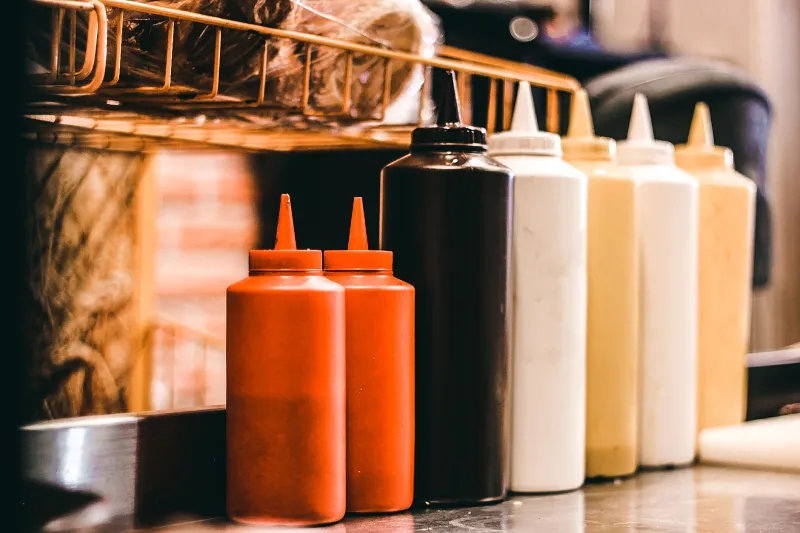
Meanwhile, the same squeeze bottle of generic sriracha you've had since last spring? Nearly empty.
This isn't a willpower problem. It's not even really a habit problem. It's something behavioral scientists call the default effect — and once you understand it, you'll never look at your condiment shelf the same way again.
Why Your Brain Defaults to the Familiar
When you're standing at the stove on a Tuesday night with a hungry family and something sizzling in the pan, your brain isn't in exploration mode. It's in efficiency mode. It grabs the nearest option that has worked before, processes it as "safe," and moves on. That's not a character flaw — that's your prefrontal cortex doing its job.
Premium, artisan sauces get mentally categorized differently than everyday condiments. Research in consumer psychology shows that people treat "special" items with a kind of protective hesitation. We save the good wine for a special occasion that never quite arrives. We keep the nice candles for guests. And we leave the handcrafted fermented pepper sauce untouched because — what if we don't use it right?
That last part is huge. There's a low-grade anxiety around expensive or unfamiliar products that behavioral economists call loss aversion. You paid more for it. You don't want to waste it on something that doesn't do it justice. So you wait for the perfect moment, and the perfect moment keeps not arriving.
The Visibility Problem Is Very Real
Beyond psychology, there's a brutally simple mechanical issue: you can't use what you can't see.
Most kitchen storage systems are designed for volume, not visibility. Pantry shelves stack bottles behind each other. Cabinet doors close. The fridge door gets crammed, and anything that isn't front and center gets pushed to the back within a week of the last grocery run.
Studies on food waste consistently show that visibility is one of the strongest predictors of whether a food item actually gets consumed. If it's in your line of sight when you open the fridge, it gets used. If it's not, it doesn't. Simple as that.
This is why ketchup always wins. It lives on the door. It's at eye level. It requires zero thought.
The "Save It for Something Special" Spiral
Here's the cruel irony of the sauce drawer effect: the more you respect a condiment, the less you actually enjoy it. You hold it in reserve. You wait. And while you're waiting, it's not enhancing your food — it's just sitting there, slowly losing its peak flavor, while you eat mediocre Tuesday dinners with mediocre condiments.
Artisan sauces aren't meant to be preserved. They're meant to be used. A small-batch smoked tomato sauce poured over scrambled eggs on a random Wednesday morning is a better use of that product than saving it for a dinner party that might happen in three months.
The goal isn't to be precious about it. The goal is to actually taste the thing.
Practical Fixes That Actually Work
Reorganize around visibility, not capacity. Move your premium condiments to the front of the fridge door or the most accessible shelf in your pantry. Put your default sauces slightly out of reach — not inaccessible, just not automatic. A small friction increase on the familiar stuff and a friction decrease on the special stuff is enough to change behavior over time.
Create a "use this week" rotation. Pick two or three artisan sauces at the start of each week and commit to working them into at least one meal. Put them on the counter. Literally put them out where you'll see them while you cook. Out of the cabinet, onto the counter. The physical presence is a surprisingly effective nudge.
Lower the stakes in your own head. You don't need a recipe. You don't need a special occasion. A drizzle of something interesting over roasted vegetables, a spoonful stirred into soup, a swipe across a sandwich — these are all valid uses of a quality condiment. In fact, they might be the best uses, because you're not overthinking it.
Use small dishes to encourage experimentation. Set out a couple of ramekins with different sauces at dinner the way a restaurant might. It reframes the experience from "using up a precious bottle" to "exploring options." People are way more likely to try something new when it's already on the table in a small dish than when they have to go find the bottle, open it, and commit.
Buy less, use more. If you're accumulating bottles faster than you're finishing them, scale back. Having two or three excellent condiments you cycle through regularly is a far better experience than having fifteen that you're vaguely aware of but never touch.
The Bigger Picture
Premium sauces and artisan condiments are an investment — not in the financial sense, but in the sensory sense. They represent someone's craft, a specific flavor tradition, a level of attention to ingredients that you just don't get from mass-market bottles. When you actually use them, that investment pays off in the form of a better meal.
But none of that happens if they stay in the drawer.
The fix isn't complicated. It's mostly just about removing the invisible barriers — physical and psychological — that stand between you and actually reaching for the good stuff. Make it visible. Lower the stakes. Give yourself permission to use it on a Tuesday.
That's when food gets interesting.