The First Thirty Seconds Are Costing You the Whole Dish
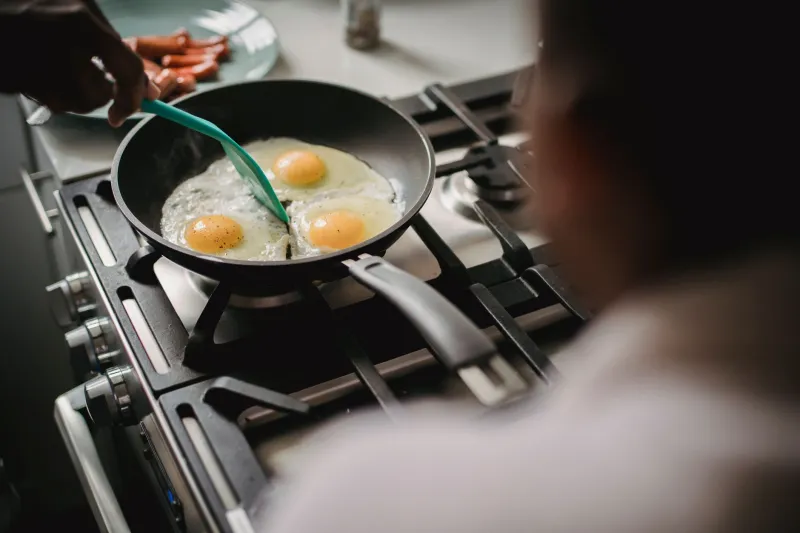
Here's something nobody tells you when you're learning to cook: the moment you turn on the burner is already a decision. The temperature you choose, the pan you grab, whether you stop to taste anything before it hits the heat — all of it shapes what your sauce can and can't do by the time it actually shows up.
Most cooking advice focuses on the sauce itself. The technique, the reduction, the finish. But a sauce can only do so much. It can't rescue a dish that went sideways in the first half-minute. And a great sauce applied to a well-built foundation? That's when things get genuinely exciting.
Here are five mistakes that happen before most people have even opened a jar — and what to do instead.
Mistake 1: Not Tasting Your Base Ingredients Before You Cook Them
This one sounds almost too simple to matter. But it matters enormously.
Proteins and vegetables vary. A chicken breast from one source is going to taste different — sometimes significantly — from one bought elsewhere. Tomatoes in August and tomatoes in January are practically different foods. If you don't taste what you're working with before you start cooking, you're flying blind.
Why does this affect your sauce? Because your sauce is being calibrated to meet the food halfway. If your base ingredient is already fairly rich and savory, you want a sauce with some brightness or acidity to balance it. If it's lean and mild, you might want something with more depth and fat. Tasting first gives you a starting point. Skipping it means you're guessing — and often oversaucing or choosing the wrong flavor profile entirely.
Take ten seconds. Taste a small piece of whatever you're cooking. It changes everything downstream.
Mistake 2: Starting With the Wrong Pan Temperature
Pan temperature at the start of cooking is one of the most underestimated variables in home kitchens. And it has a direct impact on how your sauce behaves.
If your pan isn't hot enough when protein hits it, you get steaming instead of searing. That means no fond — the caramelized bits that stick to the bottom of the pan and form the backbone of pan sauces and reductions. You're essentially throwing away free flavor before the recipe even starts.
On the flip side, a pan that's screaming hot when you add a delicate sauce or a butter-based condiment will break it immediately. You'll end up with separation, bitterness, and a greasy mess.
The fix: match your pan temperature to what comes next. High heat for building fond before deglazing. Medium to medium-high for most sauté work. Medium-low when you're incorporating a finished sauce or condiment at the end. This isn't complicated once you build the habit, but it requires thinking one step ahead.
Mistake 3: Skipping the Aromatics Layer
Garlic and onion get thrown into a hot pan as an afterthought more often than they should. Or they get skipped entirely because someone's in a hurry and figures the sauce will carry the dish.
It won't. Not fully.
Aromatics — garlic, shallots, onion, ginger, whatever's appropriate for the dish — create a flavor base that a sauce builds on rather than replaces. When you cook them properly (low and slow for sweetness, medium-high for more savory depth), they release compounds that become part of the dish's permanent flavor structure. A sauce added later amplifies that structure. Without it, the sauce is doing all the work alone, which usually means it tastes applied rather than integrated.
Even thirty seconds of properly sweated shallot changes the character of what you're building. It's not extra work so much as it is front-loading the flavor.
Mistake 4: Seasoning Too Late — or Not at All Until the End
Adding salt at the end of cooking is better than not adding it at all, but it's not the same as seasoning in layers throughout the process. Salt added early penetrates food differently than salt added late. It draws out moisture, concentrates flavor, and changes the cellular structure of proteins and vegetables in ways that finishing salt simply cannot replicate.
The same principle applies to acid — a small splash of vinegar or citrus early in the cooking process does something fundamentally different than the same amount added at the end. Early acid brightens the whole dish from the inside. Late acid sits on top.
For sauce applications specifically, this matters because a properly seasoned base lets your sauce play a supporting role instead of a compensating one. If the food underneath is flat and underseasoned, even the most complex artisan condiment is going to taste like it's working too hard.
Season at multiple points. Taste at each one. Adjust as you go.
Mistake 5: Adding Sauce Before the Pan Is Ready for It
This is the one that causes the most frustration, because it's the closest to the finish line and still goes wrong.
Adding a sauce — especially a premium one with real ingredients and no stabilizers — to a pan that still has excess fat pooled in it, or that's still running too hot, or that has liquid that hasn't reduced properly, is a recipe for a broken, greasy, or diluted result. The sauce doesn't have the right environment to do what it's supposed to do.
Before your sauce goes in, the pan should be in the right condition. Excess fat tipped out if needed. Temperature adjusted for what the sauce requires. Any deglazing liquid reduced to the right consistency. Think of it like prepping a canvas before you paint — the sauce is the paint, and the pan is the surface. The surface has to be right.
This is especially important with artisan sauces that have been crafted for specific flavor impact. A well-made sauce dropped into a poorly prepped pan loses a lot of what makes it special.
The Thirty-Second Payoff
None of these fixes require extra time in any meaningful sense. Tasting a piece of chicken takes three seconds. Checking your pan temperature before you start takes five. These are attention investments, not time investments.
But the return on that attention is enormous. When the first thirty seconds of cooking are intentional, everything that follows — including the sauce — has room to perform at its best. And that's when a genuinely great condiment gets to show you what it can actually do.