Bottle It Yourself: The Beginner's Guide to Making Small-Batch Sauces at Home
Photo: Deryckchan, CC BY-SA 3.0, via Wikimedia Commons
Why More Home Cooks Are Reaching for the Mason Jar
There's something quietly revolutionary happening in American home kitchens. More people are skipping the condiment aisle and making their own sauces from scratch — not because it's trendy, but because once you've tasted a hot sauce you built yourself from fresh chiles and garden herbs, the store-bought version just doesn't hit the same way.
Small-batch sauce-making sits at the intersection of two things a lot of cooks already love: using up beautiful seasonal produce and having something genuinely personal to bring to the table. It's also, frankly, more economical than it looks. A flat of tomatoes from a late-summer farmers market, a few aromatics, and an afternoon of simmering can yield enough sauce to carry you through months of weeknight cooking.
But where do you actually start? That's the question that stops most people before they begin.
What You Actually Need (It's Less Than You Think)
The biggest myth about home sauce-making is that you need a dedicated canning setup, a pressure cooker, and a weekend blocked off on the calendar. For most beginner-friendly sauces, none of that is true.
Here's the honest short list of equipment that covers the majority of small-batch projects:
- A heavy-bottomed pot or Dutch oven. This is your most important tool. Even heat distribution matters more than size.
- An immersion blender or countertop blender. For smooth sauces, you need one of these. An immersion blender is easier to clean and works directly in the pot.
- A fine-mesh strainer or food mill. Optional, but useful for achieving a polished, silky texture.
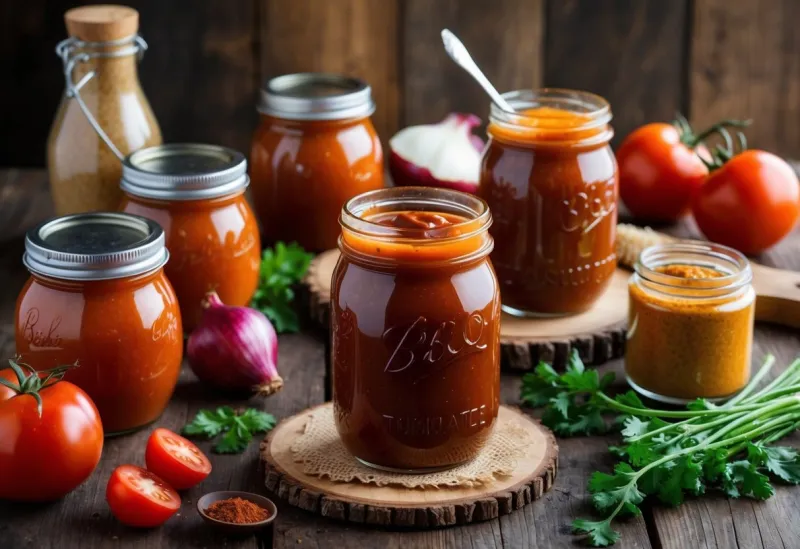
- Glass jars with tight-fitting lids. Mason jars work perfectly. Wide-mouth pints are the most versatile size for home use.
- A kitchen scale. Weighing ingredients, especially for recipes where acid balance matters, removes a lot of guesswork.
That's genuinely it for most projects. You don't need to invest in a water bath canner or specialized equipment to start making sauces that taste exceptional.
The Science of Keeping It Safe (Without Making It Complicated)
Safety is the part that makes new sauce-makers nervous, and it's worth addressing directly. The key variable in shelf stability is acidity. Sauces with a pH below 4.6 — meaning they're sufficiently acidic — create an environment where harmful bacteria, including the kind that causes botulism, can't survive.
Vinegar-based hot sauces and tomato sauces with added acid are naturally in this safe zone. If you're making a low-acid sauce (think garlic-heavy olive oil-based condiments or most nut-based sauces), those are best kept refrigerated and used within a week or two rather than stored at room temperature.
For beginners, the simplest approach is to start with high-acid recipes and keep everything refrigerated until you're comfortable with the process. You can always expand into water-bath canning for shelf-stable storage once you've got a few batches under your belt — but you don't have to start there.
Beginner-Friendly Sauces Worth Making First
Classic fermented hot sauce. This is arguably the best entry point into home sauce-making. Blend fresh chiles with a small amount of salt, pack the mixture into a clean jar, and let it sit at room temperature for three to seven days. The natural fermentation process develops a depth of flavor that no cooked sauce can replicate. Once fermented, blend smooth, add a splash of vinegar to taste, and refrigerate. It keeps for months.
Slow-roasted tomato sauce. Halve a flat of ripe tomatoes, toss with olive oil, whole garlic cloves, and fresh thyme, and roast at 300°F for two to three hours until deeply concentrated. Blend, season, and jar it up. The low-and-slow method coaxes out a sweetness and body that stovetop sauces rarely achieve.
Quick-pickled pepper sauce. Simmer sliced fresh peppers in equal parts vinegar and water with a little sugar and salt. Let them cool, blend smooth, and strain. This one comes together in under 30 minutes and works beautifully as a table sauce, a marinade base, or stirred into mayo.
The Mistakes That Trip Up First-Timers
A few patterns show up consistently in beginner batches, and knowing them in advance saves a lot of frustration.
Under-seasoning at the wrong stage. Salt added at the beginning of cooking behaves differently than salt added at the end. Taste throughout the process, not just at the finish.
Rushing the reduction. Turning up the heat to speed things along usually means uneven cooking and scorched bottom notes that flavor the entire batch. Low and slow isn't just a suggestion — it's where the flavor actually develops.
Skipping the rest. Sauces almost always taste better the next day. The flavors knit together during the rest period in a way that's hard to rush. Make your batch, jar it, and taste it again tomorrow before you decide it needs adjusting.
Using produce that's past its prime. The quality of your finished sauce is directly tied to the quality of what you start with. Overripe or damaged produce introduces off-flavors that no amount of seasoning can fully correct. Start with the best ingredients you can find — ideally local and in season.
The Satisfaction Factor
There's a reason the home sauce-making movement keeps growing. It's not just about the economics, though those are real. It's about the experience of pulling a jar you made off your own shelf, cracking it open, and tasting something that reflects exactly what you wanted to create.
Every batch teaches you something. A batch that comes out too sharp pushes you to balance acid differently next time. A sauce that's too thin teaches you to trust the reduction process. Over time, you develop instincts that no recipe can fully hand you — and that's when making your own flava really starts to feel like yours.