What the Back of Your Cabinet Is Really Trying to Tell You
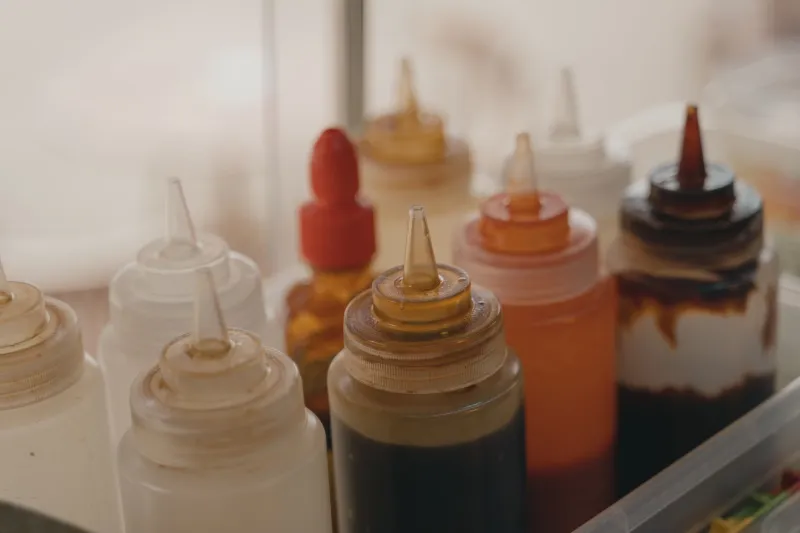
Somewhere between your everyday hot sauce and the olive oil you actually use, there's a graveyard. A sticky, half-forgotten collection of bottles that have survived three apartment moves, two kitchen reorganizations, and at least one aggressive New Year's resolution to "cook more intentionally." These aren't failures. They're fossils — and if you're willing to dig, they'll show you exactly how far you've come as a cook.
Call it sauce drawer archaeology. It's messier than it sounds, and honestly, a little more emotional too.
The Phases We All Go Through
Every home cook has chapters. There's the early chapter — the one where you're basically surviving on a rotation of five dinners and the only condiment you trust is the one that comes in a squeeze bottle shaped like a tomato. Then something shifts. Maybe you watched a cooking show. Maybe a friend dragged you to a farmers market. Maybe you just got tired of bland food and decided to do something about it.
That shift always shows up in the sauce cabinet first.
The bottle of fish sauce you bought during your "I'm definitely going to master Thai cooking" phase? Still there. The tamarind concentrate from when you went deep on Indian cuisine for about six weeks? Yep. The smoky chipotle adobo you grabbed because a recipe called for two tablespoons and you've used exactly two tablespoons? Absolutely still there.
These aren't mistakes. They're evidence of curiosity. And curiosity, in the kitchen, is everything.
What the Forgotten Bottles Actually Represent
Here's the thing about those dusty bottles: most of them were bought with genuine excitement. You weren't being reckless or impulsive. You were reaching. You wanted to cook something outside your comfort zone, and that instinct — that little pull toward something new and flavorful — is the same instinct that separates a cook who grows from one who stays stuck.
The bottle of pomegranate molasses you never quite figured out? That was you trying to bring a little Middle Eastern depth to your weeknight dinners. The jar of miso paste that's been sitting in your fridge door since 2021? You were chasing umami before you even knew the word for it.
There's also something worth acknowledging about the sentimental bottles — the ones you keep not because you use them, but because they carry a memory. The hot sauce your dad always had on the table. The BBQ sauce from that road trip through Tennessee. The brand your grandmother swore by that you can still find at certain specialty stores if you look hard enough. Those bottles aren't clutter. They're connective tissue between who you are now and where your food story started.
The Rediscovery Effect
Pulling out an old bottle and actually using it again can do something unexpected: it can reignite a whole cooking direction you abandoned halfway through.
That fish sauce you wrote off? A few dashes in a pan sauce or a simple vinaigrette, and suddenly you understand it in a way you didn't before. The tamarind concentrate? Stir some into a slow-cooked braise with a little brown sugar and you've got a depth of flavor that's genuinely hard to achieve any other way. The pomegranate molasses? Drizzle it over roasted carrots with a little tahini and you'll wonder why you ever stopped buying it.
The difference between then and now is context. When you first bought those bottles, you were probably following a recipe to the letter, hoping it would just work. Now you have enough kitchen instinct to improvise — to taste, adjust, and trust your palate. The same ingredients that confused you a few years ago are suddenly a lot more approachable.
That's growth. Real, measurable cooking growth, and the evidence was sitting in your cabinet the whole time.
A Practical Way to Do the Dig
If you're going to take this seriously — and we think you should — here's a low-pressure approach that doesn't require a full weekend and a label maker.
Start by pulling everything out. Yes, everything. Line it up on the counter and just look at it. You'll immediately notice a few things: the bottles you reach for constantly, the ones you forgot existed, and the ones you're genuinely not sure how they got there.
For the forgotten ones, do a quick smell and taste test before you do anything else. Sauces don't always go bad in obvious ways, but your nose is a remarkably good judge of whether something is still worth working with. If it smells off, let it go without guilt. If it smells interesting — even if you can't immediately place how to use it — keep it and give it a second chance.
Then, pick one forgotten bottle per week and challenge yourself to actually use it. Not in a recipe that calls for it specifically, but in something you're already making. Add a spoonful to your scrambled eggs. Whisk it into a marinade. Use it as a base for a quick dipping sauce. The constraints of working with what you have are often where the most interesting cooking happens.
The Shelf as a Mirror
Your sauce shelf isn't just storage. It's a portrait of your palate at every stage of your cooking life — the phases you've moved through, the cuisines you've flirted with, the flavors you've committed to, and the ones that are still waiting for their moment.
The cooks who have the most interesting shelves aren't necessarily the ones who cook the most elaborate meals. They're the ones who kept reaching — who bought the unfamiliar bottle, tried it even when they weren't sure how, and let their palate lead them somewhere new.
So the next time you're tempted to do a ruthless cabinet cleanout, slow down a little. Look at what's actually back there. Some of it genuinely needs to go. But some of it might be exactly the ingredient that takes your cooking somewhere you haven't been in a while — or somewhere you've never been at all.
The best kitchens aren't the tidiest ones. They're the ones with a little history in them.